How to Sell Products Online in Nigeria Without Coding (2026 Guide)
A beginner's guide to selling products online in Nigeria without coding: find your customers, move beyond manual WhatsApp orders, accept payments, manage delivery and stock, and win repeat buyers.
The short answer: to sell products online in Nigeria without coding, pick a product you can describe and deliver well, show it with clear photos, give customers one simple way to order and pay, and use a no-code store platform so orders, payments and stock are recorded in one place. You can start with WhatsApp or Instagram, then move to a dedicated storefront when manual orders start to slow you down.
Last updated 12 October 2026. Screenshots are from the Webift dashboard. Prices and features were checked on that date and may change.
If you already have products and customers and want to move beyond manual orders, you can create a professional storefront with Webift while you read.
This guide covers the whole journey of selling online: choosing products, finding customers, getting paid, delivering and keeping buyers. If you want the detailed store setup, see our step-by-step guide to creating an online store in Nigeria.
Step 1: Choose what to sell
The best first product is one you can source reliably, describe clearly and deliver without drama. Think about three things:
- Demand: are people already asking for it in your chats, community or neighbourhood?
- Margin: after the cost of goods, packaging, delivery and payment fees, what do you keep?
- Simplicity: a product with few sizes and little fragility is easier to start with than one with many variants.
A fashion seller in Lagos might start with ready-to-wear Ankara pieces. A beauty vendor in Abuja might start with a hair and skin care bundle. An electronics merchant in Computer Village might start with phone accessories. A food business in Port Harcourt might start with weekly meal boxes. A student might sell handmade items or digital study notes.
Step 2: Know your customers
Describe your buyer in one sentence: who they are, where they live, what they worry about and how they like to pay. A busy professional in Lekki worries about delivery time. A student worries about price. A gift buyer worries about presentation and trust.
Ask your existing customers why they buy from you and what almost stopped them. Their answers tell you what to put in your product descriptions and what to fix first.
Step 3: Take good photos and write clear descriptions
Photos sell more than words on a phone screen:
- Use natural light near a window, and a plain background
- Show the whole product, then a detail, then the product in use
- Keep the angle and background consistent across your catalogue
- Add a size reference such as a hand or a ruler
For each description, cover what it is, the material or ingredients, sizes or measurements, what is included, how long delivery takes and how to return or exchange it. Short paragraphs and bullet points read better on a phone.
Step 4: Start where your customers already are
You do not need a website to make your first sale. Many Nigerian sellers start on WhatsApp and Instagram because customers are already there.
- WhatsApp: the free WhatsApp Business app lets you set a business profile, quick replies and a product catalogue. Post products on your status and share them in your broadcast lists, only with people who have agreed to hear from you.
- Instagram: post clear photos and short videos, use a link in your bio, and reply quickly to messages.
- Facebook: share products on your page and in relevant buy-and-sell groups, following each group's rules.
The problem with selling through messages alone
Chat selling works until it grows. Then the same problems appear:
- Lost orders: a message gets buried and the customer never hears back
- Repeated questions: you answer the same price and delivery questions all day
- Payment confusion: you wait for transfer screenshots and cannot tell which one is genuine
- Stock mistakes: you promise an item that sold out an hour ago
- No records: you cannot easily see who bought what, or who owes you
- A less professional feel: some customers hesitate to pay a number they cannot verify
A dedicated storefront does not replace your chats. It gives them somewhere to land: a link where customers see products and prices, choose delivery, pay and receive an order confirmation.
Step 5: Move to a dedicated online storefront
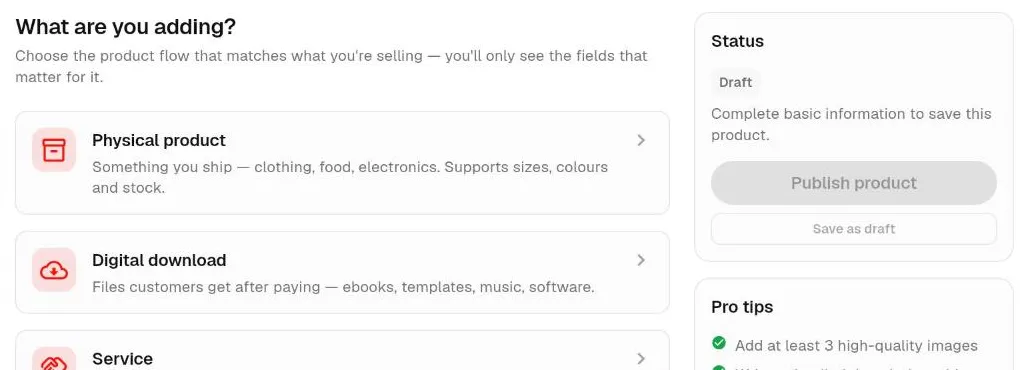
A no-code platform lets you build that storefront without a developer. With Webift you can:
- Create a store with your name, logo and web address
- Add physical products, digital downloads or services, with variants such as size and colour
- Track stock with low-stock warnings
- Accept payments through the methods you choose
- Set delivery by city or state, with free-delivery rules
- See every order and customer in one dashboard
Webift has a free plan with no subscription price and a Standard plan from ₦5,000 per month (checked 12 October 2026; prices may change). Payment-provider fees such as Paystack's or Flutterwave's apply separately. If you are comparing options, see our guide to the best ecommerce platforms in Nigeria.
Create your Webift store
Register with your name, email, password, business name and phone number. The dashboard then shows a "Get to your first sale" checklist: add your first product, set up payments, configure delivery if you sell physical goods, customise your storefront, publish and get your first order.
Move beyond manual orders. Create a professional storefront with Webift.
Step 6: Set up payment collection
Open Settings, then Payment Settings. You can turn on several methods at once, and customers choose at checkout.
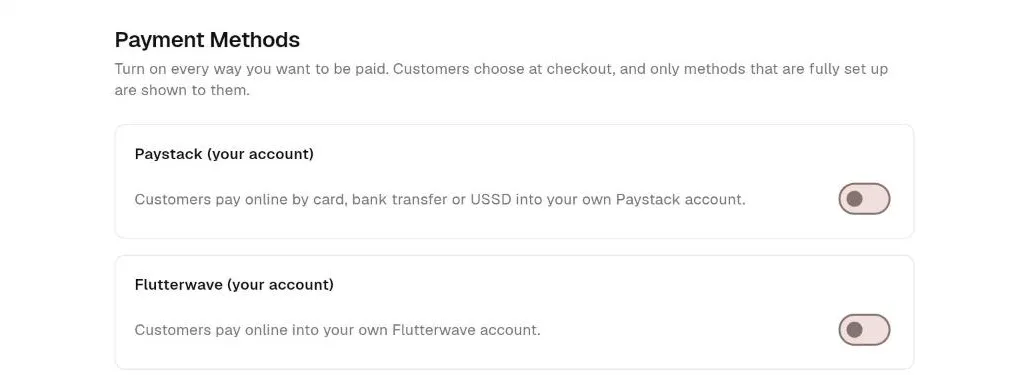
- Paystack or Flutterwave: customers pay online into your own account, and you add your keys
- Bank transfer: customers see your account details and pay you directly, and you confirm each payment
- Cash on delivery: available only for physical products
A caution on bank transfers: do not release goods on a screenshot. Check your bank app for the credit, because fake alerts and edited screenshots exist. Our guide to accepting online payments in Nigeria explains how to handle failed payments, confirmation and refunds.
Step 7: Arrange delivery
Decide where you deliver, what you charge and how long it takes. In Webift, Settings then Shipping lets you choose home delivery, customer pickup or both, and deliver to one city, one state, anywhere in Nigeria or specific places. You can set a free-delivery threshold to encourage bigger baskets.
Be honest about timing. A clear "Lagos: 1 to 2 days, other states: 3 to 5 days" builds more trust than a vague promise. Webift does not currently book couriers for you, so arrange dispatch yourself and update the order status as it moves.
Step 8: Manage stock and orders
Update stock whenever you restock, and set a low-stock warning for your best sellers. Process orders in a fixed routine: confirm payment, pack, dispatch, mark as shipped and tell the customer. Webift tracks orders from new to delivered, sends email updates and returns stock to inventory if you cancel an order.
Step 9: Promote your products
- Share your store link everywhere: WhatsApp status and profile, Instagram bio, Facebook page
- Post consistently: new arrivals, behind-the-scenes, customer photos with permission
- Use discount codes thoughtfully: Webift supports percentage or fixed codes with start and end dates, usage limits and a minimum order amount
- Ask happy customers to share: a photo and a recommendation are worth more than an ad
- Show up locally: mention your delivery areas in captions and bios
If you want a shop that also sells downloads, read how to sell digital products in Nigeria.
Step 10: Build customer trust
Trust is the main obstacle for online buyers in Nigeria, and you can earn it with small, consistent actions:
- Use real photos of your own products, not stock images
- Publish your delivery times, fees and return policy
- Give a working phone number and reply promptly
- Send order confirmations and updates
- Share genuine customer reviews, with permission, and never invent testimonials
- Mention your business registration if you have one
- Deliver what you promised, on time
Step 11: Win repeat customers
Selling to someone twice costs less than finding a new buyer. After the first order:
- Send a thank-you and ask for feedback
- Follow up when a replenishable item (such as skin care or food) is likely to run out
- Offer a small discount code for a second order
- Use abandoned-cart reminders: Webift can send a recovery email to shoppers who left items in their cart
- Keep a simple customer list so you remember preferences and birthdays
Common mistakes to avoid
- Selling too many products before you can serve them well
- Posting dark or blurry photos
- Hiding the delivery cost until the last moment
- Releasing goods on unverified transfers
- Taking orders for items you do not have in stock
- Replying slowly and losing the sale
- Skipping records of orders and payments
- Copying a competitor's price without knowing your own costs
Frequently asked questions
Do I need a website to sell online in Nigeria?
No. You can start on WhatsApp or Instagram. A storefront helps once you have regular orders and want payments, stock and delivery handled in one place.
Can I sell without coding?
Yes. No-code platforms like Webift let you add products, set payments and publish a store through a dashboard.
How do I accept payments online?
Connect a payment provider such as Paystack or Flutterwave, offer bank transfer, or both. Webift also supports cash on delivery for physical products.
How much does it cost?
It depends on the platform. Webift has a free plan with no subscription price and a Standard plan from ₦5,000 per month (checked 12 October 2026). You also pay payment-provider fees on sales.
Can I sell from home?
Yes. Many Nigerian sellers run their stores from home and dispatch through couriers or riders.
How do I get my first customers?
Start with people who already know you: friends, family, past customers and followers. Share your store link, ask for honest feedback and improve before you spend on ads.
Final thoughts
Selling online is a skill you build with small steps: a good product, honest photos, a simple way to pay, reliable delivery and a habit of keeping customers happy. When manual orders start to slow you down, create your Webift store and give your customers one clear link.